Tasman Bay
Little Blue Penguins / Kororā
Image credit: Craig Martin
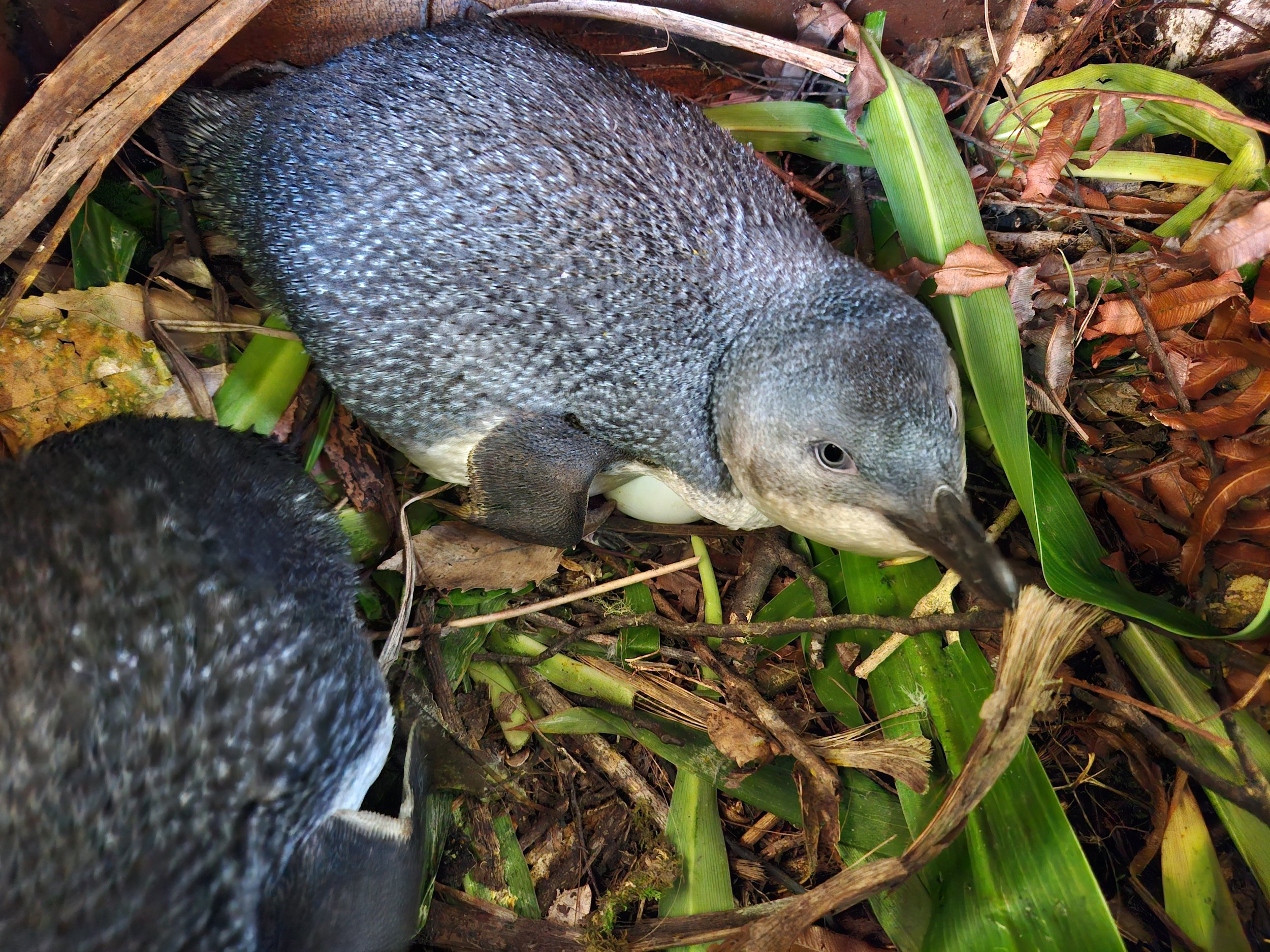
Little Penguins/kororā are found all around New Zealand’s coastline. Once abundant in number, their official conservation status is now “at risk/declining”.
Let’s love and protect our local little blues/kororā by ensuring they have a safe habitat to thrive in.

Love Our Little Blues - What We Do:
The goals of Tasman Bay Blue Penguin Trust (Love Our Little Blues) include these key objectives and conservation projects:
to preserve, protect and enhance our local population of Little Blue Penguins/kororā and their habitat
penguin advocacy with local and central government for improved wildlife legislation and planning strategies
provisioning nest boxes to keep them safer from predators
predator control and trapping, especially for stoats
raising community awareness through media articles, signage, website, social media etc
Identifying and delivering educational opportunities
collaboration with the scientific community to help improve the overall knowledge base of little blues and the eco system they live in
regular beach clean ups to make the penguin habitat safer
commissioning penguin monitoring, surveys and data collection
providing emergency response to injured or sick penguins in collaboration with experienced & DOC-permitted rehabilitation services
Love Our Little Blues - What You Can Do
Volunteer to join a trapping roster and clear predator traps
If you are a dog owner, take responsibility and keep your dog under 100% effective control when in wildlife habitat areas by keeping it on a leash
Know where and when you are allowed to take your dog
Dog owners should be extra careful around dawn and dusk when vulnerable penguins are going out to sea or returning to the nest
It is a legal requirement for dog owners to carry a lead in public, even in off-lead areas
If you have a cat living with you, ensure it is locked in at night so it doesn’t disturb nesting penguins & chicks and other birdlife
If you are a beach walker, keep to wet sand to avoid disrupting beach-nesting birds
Volunteer to help with beach clean ups
Call DOC Hotline: 0800 362 468 if you find an injured or dead penguin (put it in your phone contacts now!), take photos, be able to describe your exact location and incident you are seeing. Stay with the penguin until help arrives. If there is a dog in the vicinity make sure it is on a leash and led away from the penguin
If little blues/korora are around or under your house ensure you don’t inadvertently block them in - or out
Look out for informational signage advising there are penguins in the vicinity
Take care when walking in sand dune areas so you don’t inadvertently cave in a burrow

Fast Facts
Official name: Little Penguin / kororā - Eudyptula minor (good little diver)
NZ status: protected native species
DOC conservation status: at risk, declining
Famous: world’s smallest penguin
Dimensions: 35-43cm tall (about the size of a rugby ball), weight 1-1.3kg
Protected by the Wildlife Act, administered by Department of Conservation (DOC)
Swim up to 50km/day to feed chicks during the breeding season
Communicate via a range of calls to identify each other and claim/defend territory
Swim speed: up to 6km/hour
Dive to depths between 5-10 metres, maximum 60 metres
Love to eat small herring-sized fish, squid and krill
Nest close to the sea in caves, rock crevices, under vegetation or tree roots, as well as man-made nest boxes, under houses or wood piles
Sleep for only about 4 minutes at a time
Life Cycle of Little Blues
Breeding season: July to Oct/Nov, sometimes longer
Typically lay 1-2 eggs, incubated in 36 days
Typically raise 1 clutch of 1-2 eggs per season
Both adults take responsibility for raising chicks
Chicks are fully grown at 8 weeks when they fledge (leave the nest)
Moulting season: Nov to Feb/Mar when they come ashore for 2 weeks. During this time they don’t feed and are particularly vulnerable to predation
Average life span 8-10 years, but can be up to 20 years
Foraging period Mar to July at sea in preparation for next breeding season

Counting Little Blues
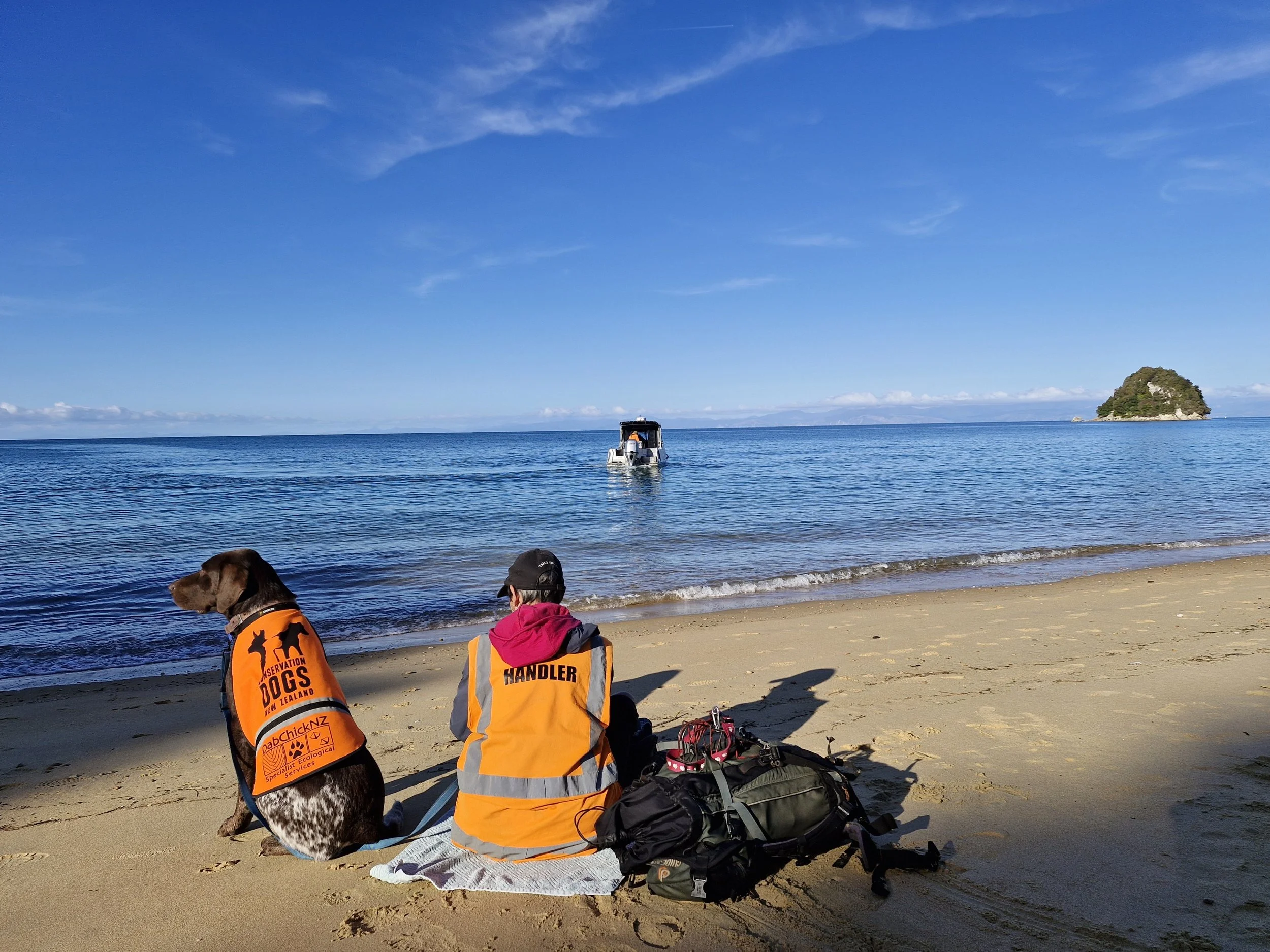
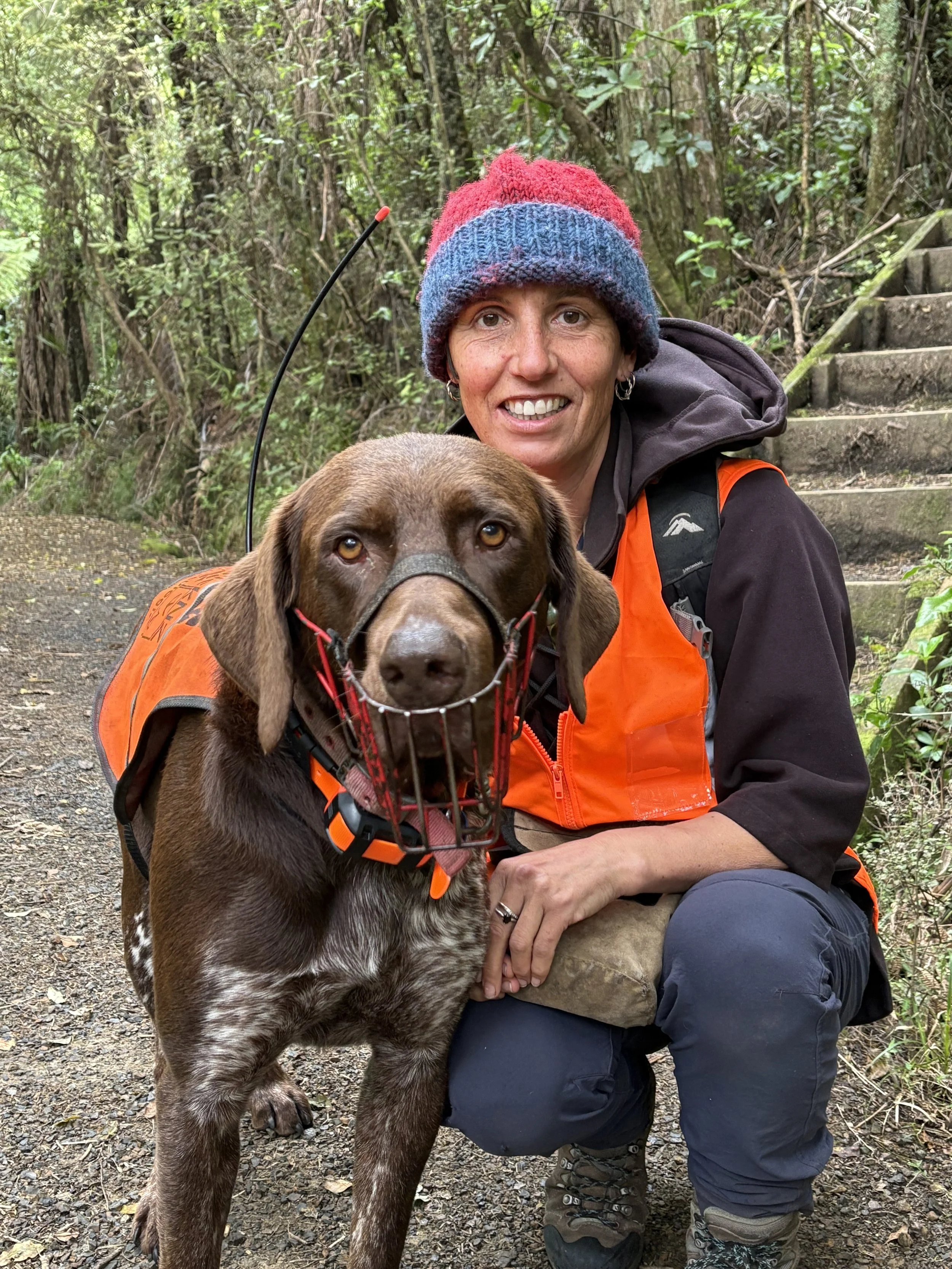
Establishing baseline data of the local little blue population & distribution is vital to ensure that resources are appropriately focused.
The first survey was conducted In Oct 2020 by Alastair Judkins & his penguin detection dog, Mena. In August 2026 Jo Sim and Miro surveyed the same coastline between Tapu Bay and Split Apple.
More here: https://www.tasmanbaypenguins.org.nz/updates/penguinsurvey
Flash New Houses
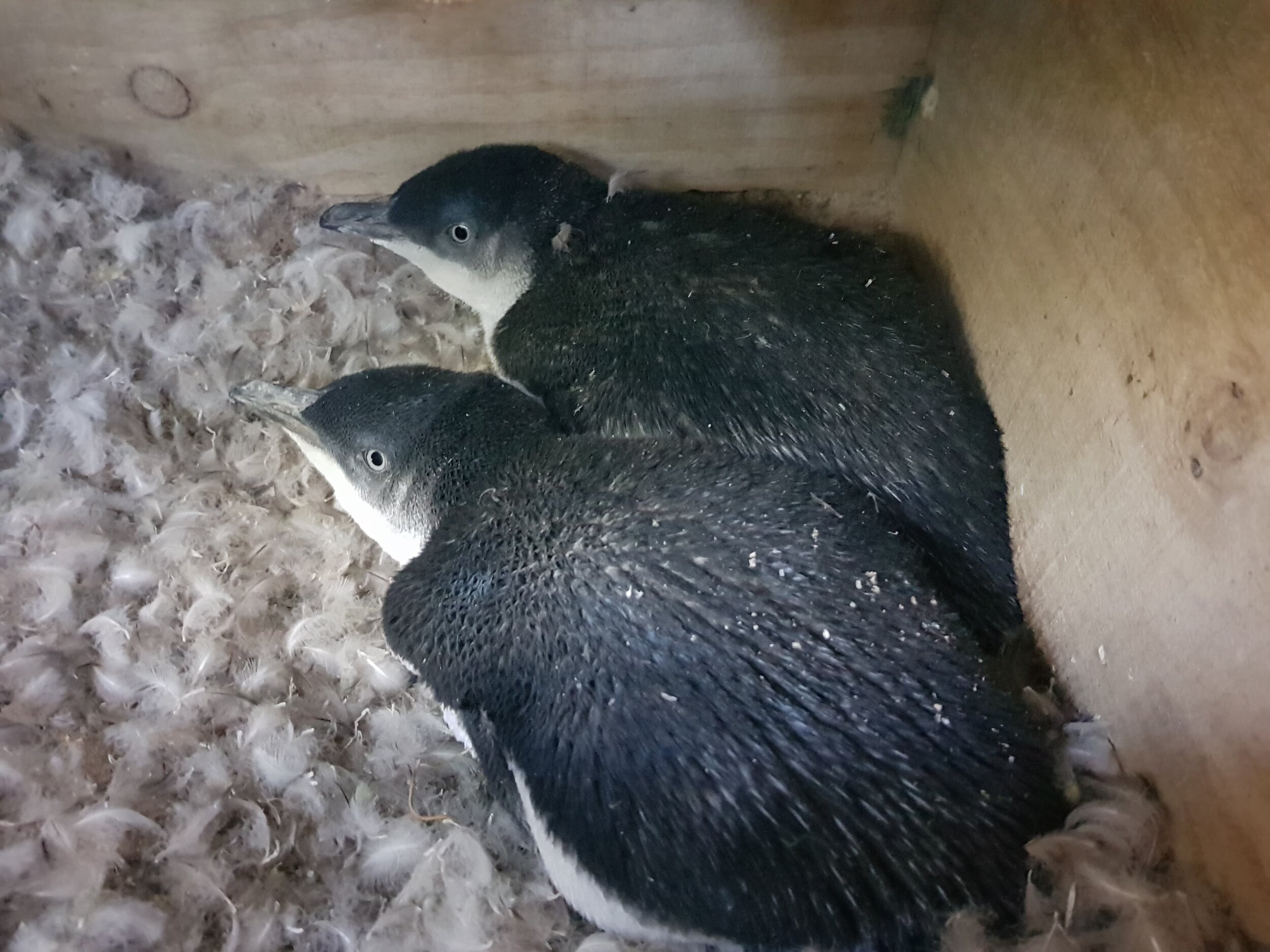
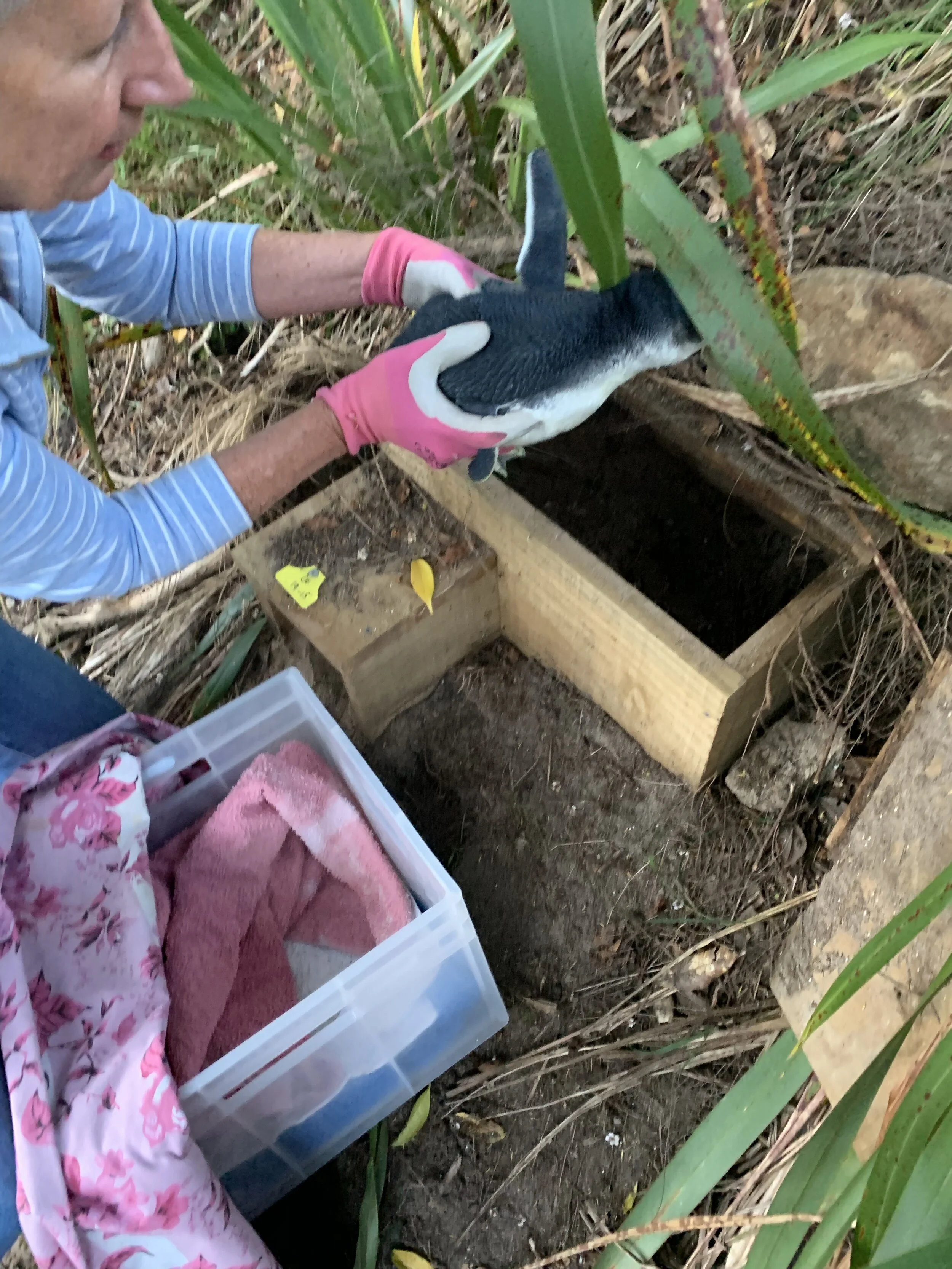
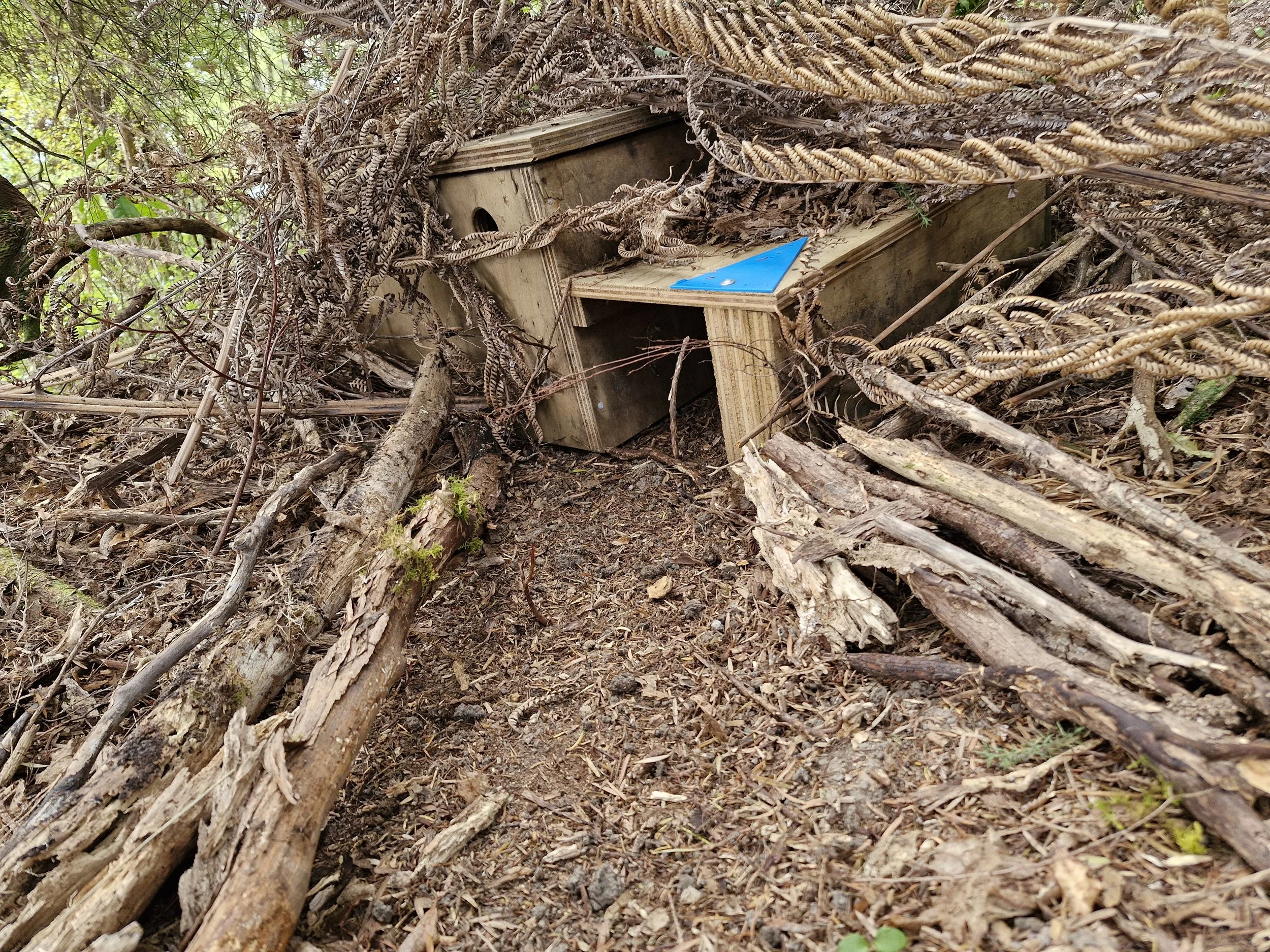
Provisioning nesting boxes to help keep little blues safer from predators during the breeding and moulting seasons when they come ashore is an important component of the conservation plan. With open plan layout, neutral decor and easy indoor/outdoor flow, these wee houses are a winning design for our local little blues. And the lids make for easy monitoring of occupants.

Snapping Predators
Effective predator control helps keep our local little blues safer. Traplines along local bays target rats, stoats, weasels and ferrets, all of which prey on little blue eggs and chicks. Approved DOC150 and DOC200 predator traps are used with peanut butter, dried rabbit and blood formula as lure. A trusty team of volunteers regularly check and clear the traps and record the catch. Thanks team!
Little Blue Ambulance Service
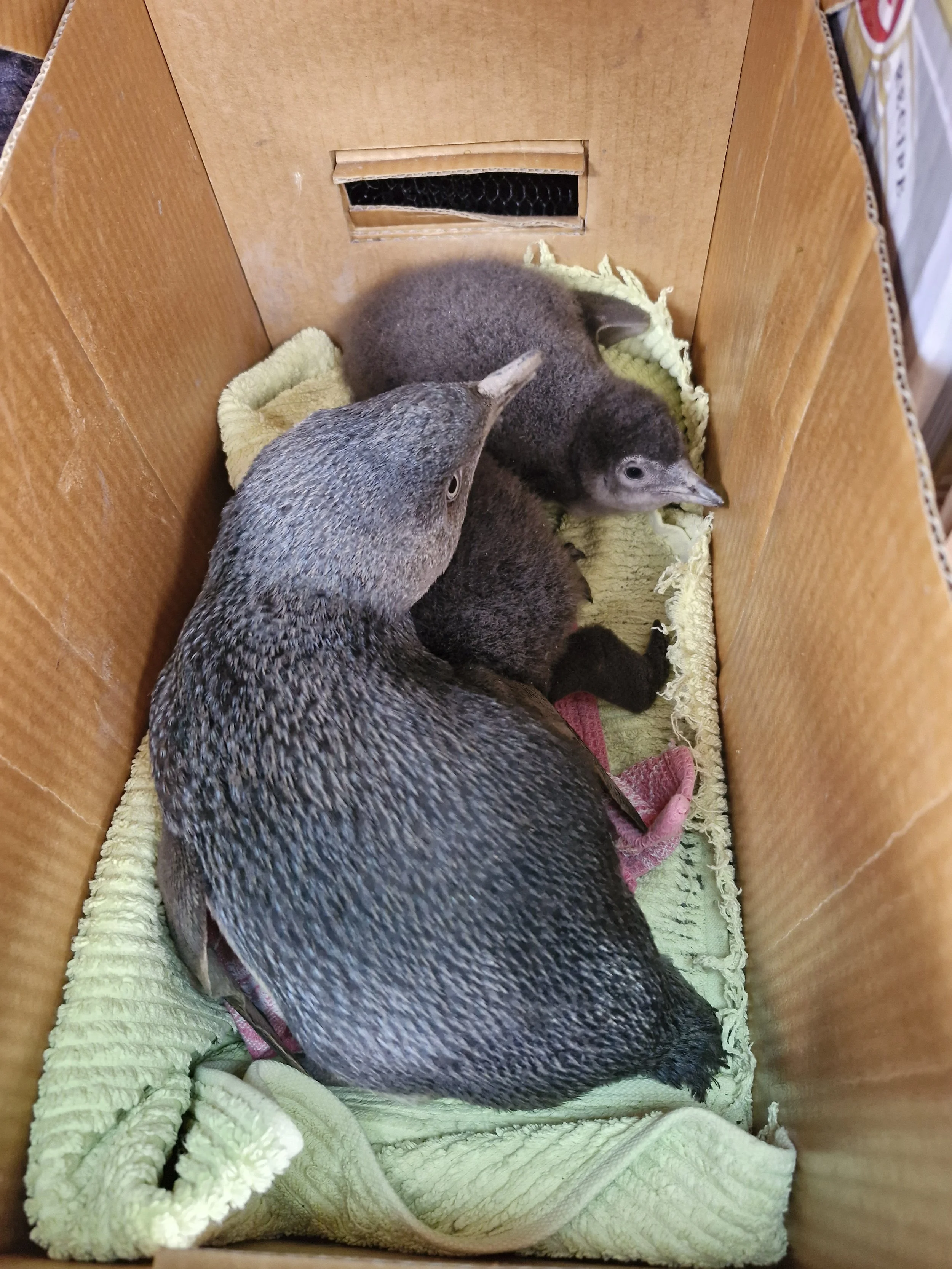
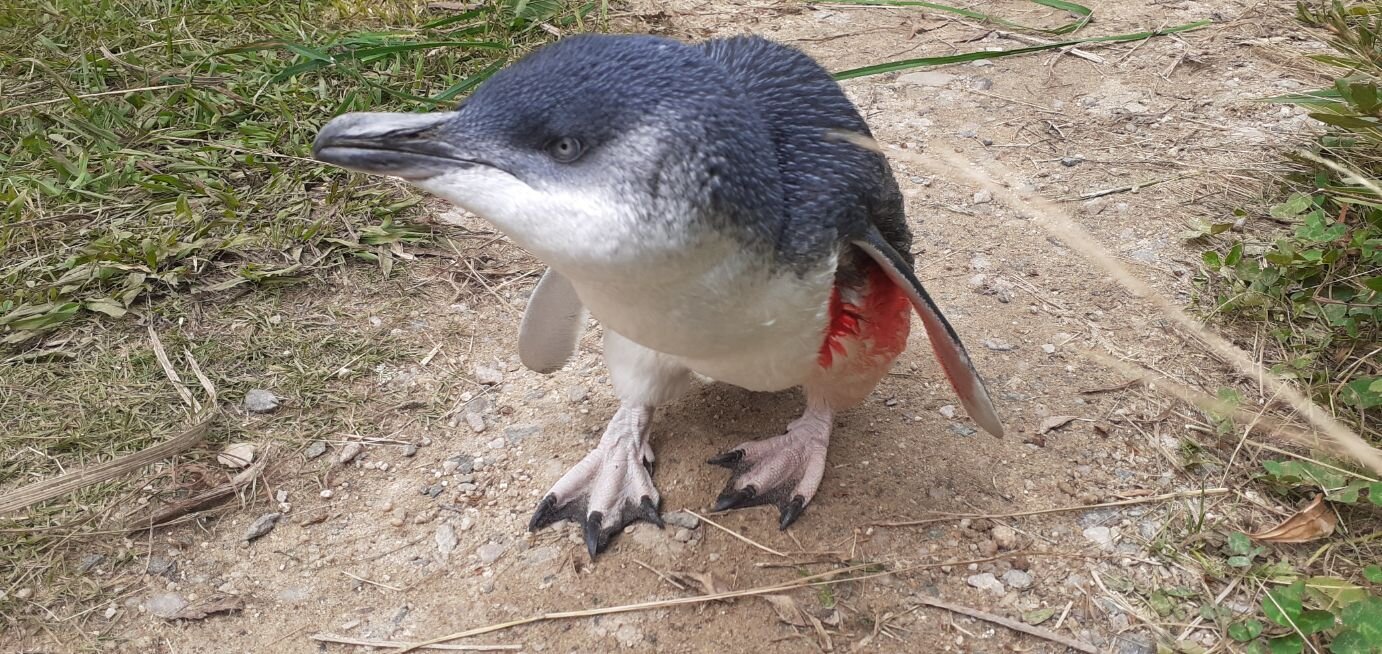
Getting an injured or sick penguin into experienced care quickly greatly enhances its chance of survival. Once it is healthy & passes its swim test it is released back into its local environment.
If you find an injured penguin please call the DOC Hotline 0800 362 468. Take photos, be able to accurately describe your location & situation you are observing and stay with the little blue until help arrives. Thanks!
other stuff we do
Little Blues Live Here!
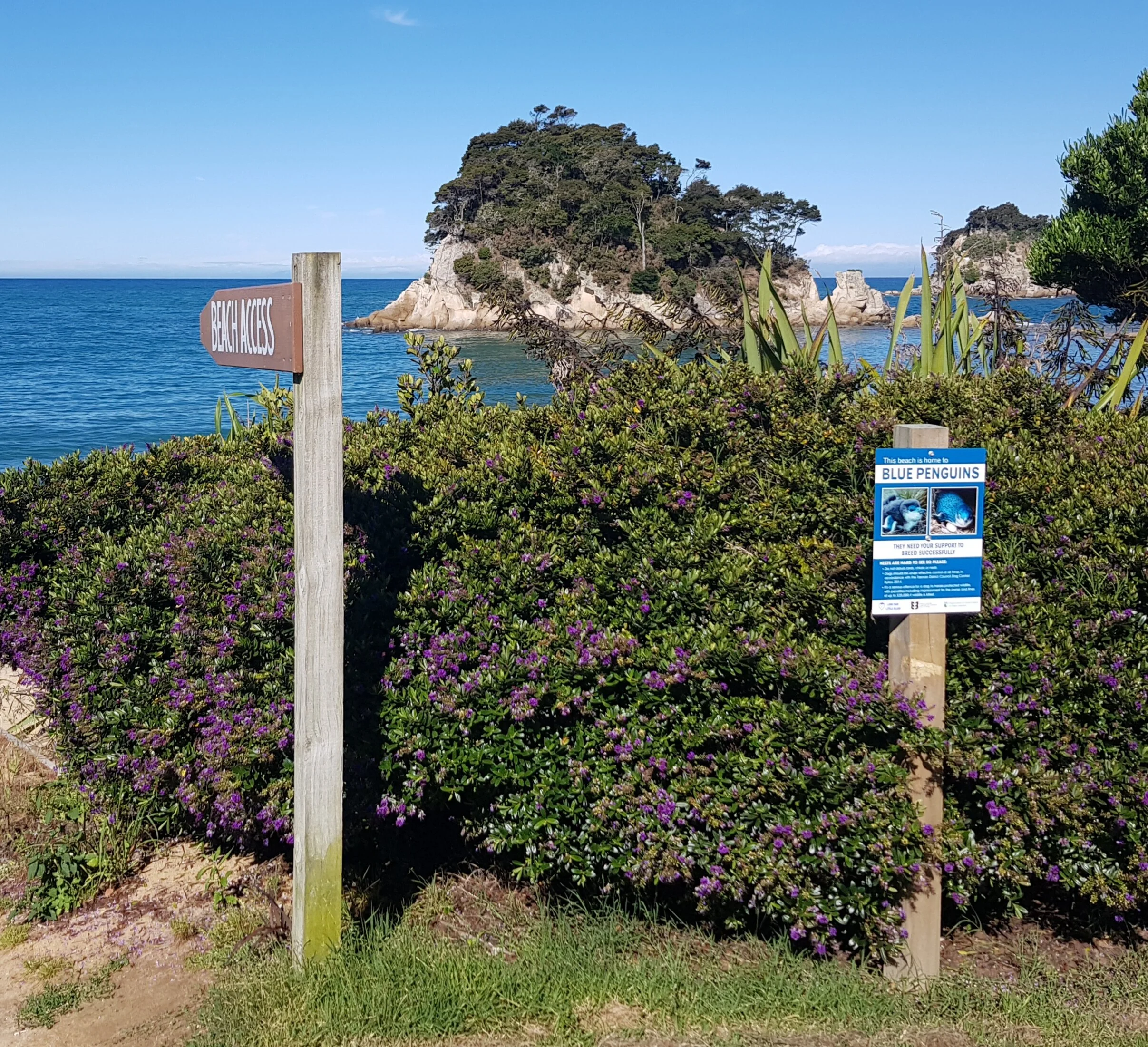
Raising awareness of our little blues and the dangers they face is integral to conservation efforts. Engaging with local community via social media, newspaper articles, presentations to interested groups & provisioning signage at relevant beaches all help to keep our little blues safer. Little penguins keep well hidden on land (for good reason!) so many people aren't aware of them.

Penguins and Pooches
Ensuring that dog owners are aware of penguins in and around the beach, dune & headland areas is crucial to avoid disturbance. Little blues are very vulnerable while they are on land, particularly during the breeding & moulting seasons (Aug-Apr). Disturbance during the breeding season can cause the adult penguins to abandon their chicks to starvation. Ensuring that dogs are under effective control, preferably on a lead, is crucial.
Beach Clean Ups & Litter Monitoring
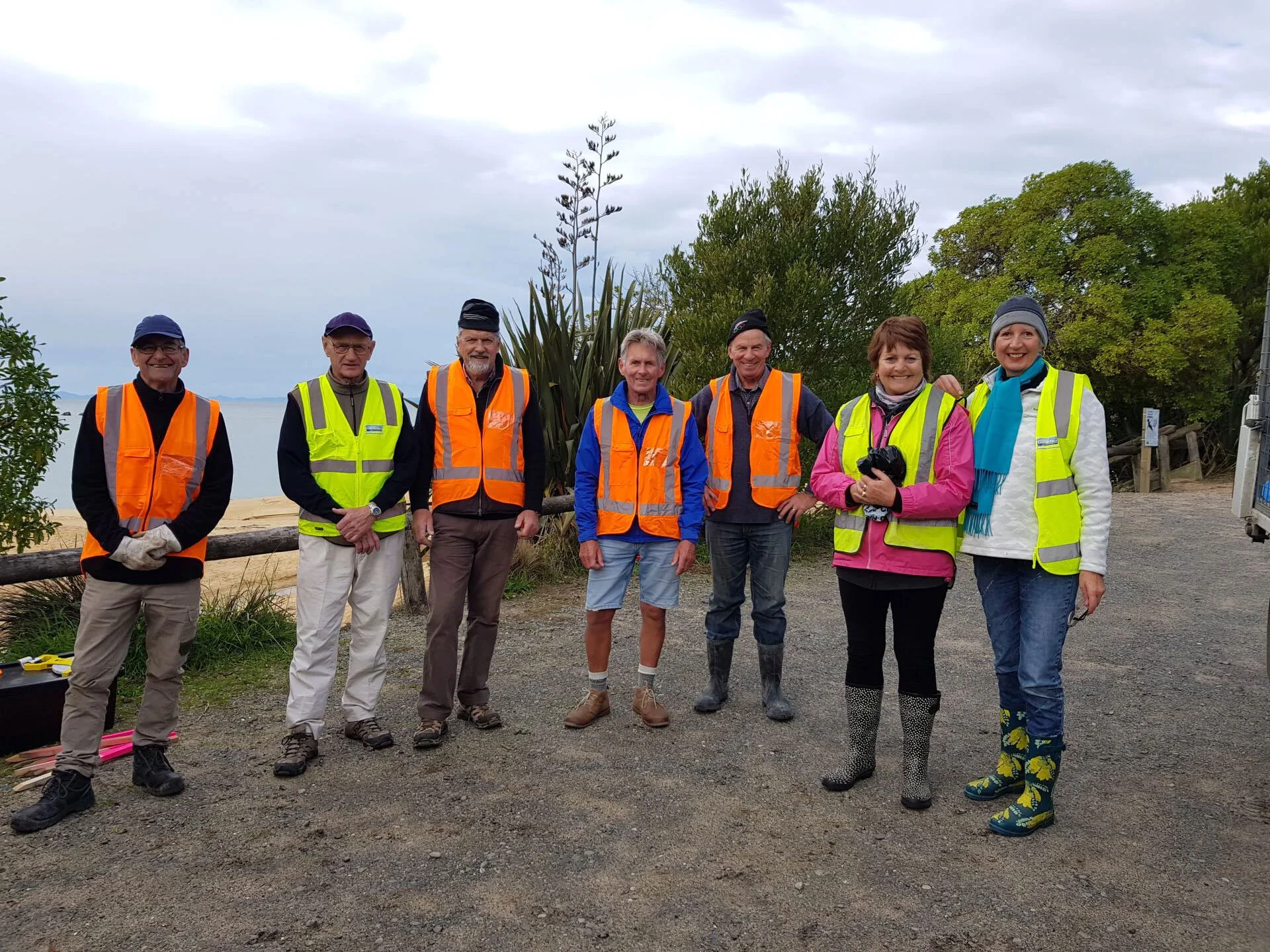
Community beach clean ups keep local beaches free from litter which can harm little blues and other species. It's amazing what you find! Data from regular surveys of litter is submitted to Sustainable Coastlines as part of their nationwide litter intelligence programme.